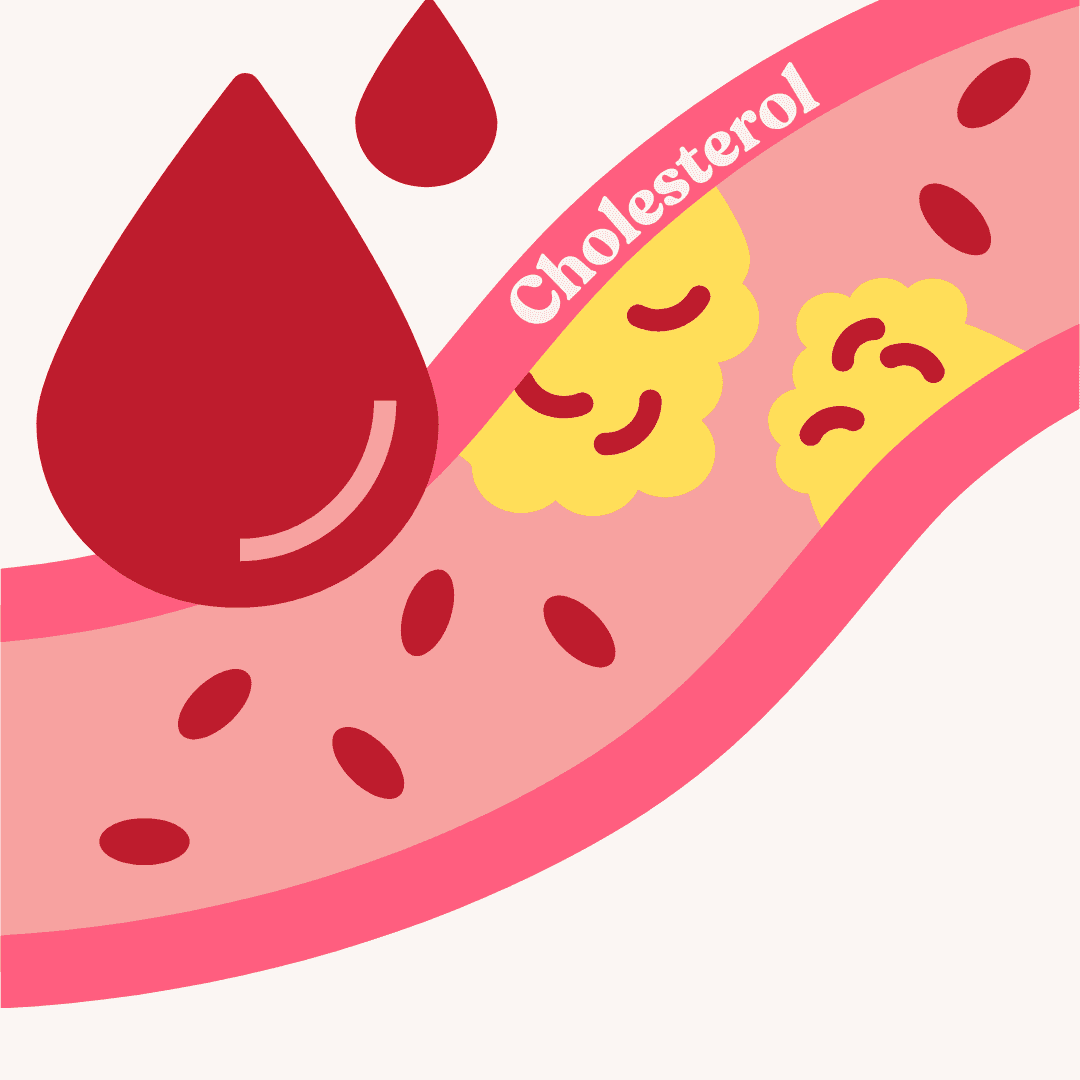
During PMOS (PCOS) Awareness Month (which is September!), most of the conversations revolve around menstrual cycles and ovarian function. This year, the name change from polycystic ovary syndrome to polyendocrine metabolic ovarian syndrome is another area that's in the spotlight.
The most important part of this name change is the inclusion of the METABOLIC piece. People with PMOS are an increased risk of cardiometabolic issues--think insulin resistance and diabetes, fatty liver disease, high cholesterol, and elevated blood pressure.
This is especially important as you approach menopause. In perimenopause, as estrogen fluctuates and declines, this has a very real impact on your cardiometabolic health.
Total Cholesterol: The total amount of cholesterol circulating in your bloodstream across all transport particles.
HDL Cholesterol ("Good"): High-Density Lipoprotein acts like a cleanup crew, carrying excess cholesterol away from your arteries and back to the liver for elimination.
Non-HDL Cholesterol: Represents all particles that transport cholesterol toward arterial walls. This includes LDL, VLDL, and IDL, which have the potential to deposit cholesterol and contribute to plaque buildup.
LDL Cholesterol ("Bad"): The primary subset of non-HDL cholesterol. When your LDL rises, your non-HDL and total cholesterol numbers naturally follow.
Three other markers I'll discuss in another post are: triglycerides, ApoB, and Lp(a)
In Canada, current cardiovascular guidelines generally recommend that cholesterol screening begin at age 40. While this cutoff is designed to capture population-level risk as we age, it overlooks a critical physiological reality: cumulative cholesterol exposure over time.
The consequences of mildly elevated cholesterol over time MATTERS because it's sloooowly contributing to plaque formation and cardiovascular disease risk. Also, we don't feel it happening.
The longer your cholesterol is elevated, the higher the risk of plaque formation.
Think of cholesterol exposure like sunlight exposure on your skin without SPF--the sun spots and collagen breakdown happen LATER, like years later, often when chronological ageing or a hormonal transition like perimenopause brings it a bit more to the surface.
In the same way, a modestly elevated LDL cholesterol level that sits unmanaged starting in your 20s or 30s presents far more opportunity for arterial plaque formation over a 20-year span than a an increase later in life.
This delay is particularly problematic for women and individuals with a significant family history of heart disease as well as those with hormone-sensitive conditions or in a time when hormones are changing. Advocating for a baseline lipid panel before age 40 gives you an important benchmark to track changes accurately as your hormones begin to transition.
If we can catch it earlier, then we also have a longer runway to work on it and manage it better and decrease your risk of heart disease.
Estrogen's protective effect: During our reproductive years, estrogen exerts a protective effect on the cardiovascular system and helps keep lipid levels somewhat in check. Because younger women are generally classified as "low risk," mild elevations are often dismissed or never checked in the first place. In conditions like PMOS, especially with this new name change, we're starting to check lipids at an earlier age to make sure that we have a baseline and we're monitoring this sooner rather than later.
Cholesterol levels shift the most dramatically the window one year before and one year after your final menstrual period. Without a premenopausal baseline drawn in your 30s or early 40s, it's impossible to know whether a high number at age 45 is a brand-new hormonal spike or the continuation of a long-standing trend.
Pregnancy is a time that's called a "stress test for your cardiovascular system". If you had or have gestational diabetes, elevated cholesterol, and/or gestational hypertension, this puts you at risk for future cardiovascular disease risk later on, especially as we lose estrogen in the lead-up to menopause and beyond. These gestational findings have a higher prevalence in those with PMOS.
As my colleague, Dr. Alex Verge, ND says: "just because something is lifestyle-influenced, doesn't mean that your lifestyle caused it."
If your lipid panel comes back elevated, it's important to understand that a high cholesterol number does NOT mean you did something wrong per se. Hormonal shifts, genetics, underlying inflammatory conditions, and systemic issues like a lack of screening & lack of education are all factors involved here!
That said, targeted nutrition remains has 2 very important levers that are important for your cholesterol as well as blood pressure, blood sugar regulation, and cognitive health:
1. Decrease saturated fat: Swap out high-saturated sources (like fatty cuts of red meat, full-fat butter, and palm oils) for mono- and polyunsaturated fats (extra virgin olive oil, avocados, nuts, seeds, and cold-water fish like salmon). The target here is to bring saturated fat intake below 10% of your total daily calories, which for most people, is going to be <20g per day.
2. Increase fibre intake, especially soluble fibre: Fibre only comes from plants, and we want a diversity of plants in your diet. Insoluble fibre is the roughage, while soluble fibre is the kind that gets a little goopy in water. The best sources for lowering cholesterol in the latter group include psyllium husk, ground flaxseed, oats, lentils, beans, and apples. Aim for >30g of total fibre per day, including >10-20g of soluble fibre per day. Here's a blog post on how to add 5g of fibre easily into your day. When adding fibre, it's best to go slowly so that you don't aggravate your GI tract!
Exercise and weight reduction (especially waist circumference reduction by >5%) can also be very helpful!
In the integrative and naturopathic health space, many patients feel an overwhelming pressure to "fix" their numbers naturally and view prescription medication as a personal failure. Sometimes, we can achieve a lower number with lifestyle alone. However, sometimes, your genes and past 40+ years on Planet Earth say otherwise. This is not a personal failure, as I mentioned earlier, just like some people have eczema or migraine.
If you have PMOS, you have added layers of personal medical history that's contributing. If you're near or past menopause, then your hormones and chronological ageing are playing a very real role.
Statins are the primary group of medications we use to lower cholesterol levels. We're not lowering cholesterol for the sake of lowering cholesterol--we're lowering cholesterol to PREVENT cardiovascular disease and events like heart attacks and stroke! Statins are proven to decrease the risk of things like that and decrease the risk of dying from things like that.
There are very real consequences of elevated cholesterol, especially when it's high for long periods of time. This is why we care. The leading cause of death in women continues to be HEART DISEASE.
Here are some considerations:
Lipid markers respond quickly. After implementing targeted nutrition and fibre adjustments and/or other lifestyle modification, your cholesterol levels will reflect those changes within 4 to 12 weeks. You do not need to wait six months to know if a strategy is working. Test sooner so we can get you on the best path sooner. ApoB and Lp(a) should also be tested (more on these in a different post).
Medication could be temporary or long-term: If robust dietary changes and/or weight loss only yield a minor improvement, or if those dietary restrictions feel unsustainable for your quality of life, layering a low-dose lipid-lowering medication with manageable lifestyle habits can offer significant, long-term cardiovascular protection. You could also take a bit of longer to implement said changes if you have a medication in place and try coming off it later if possible.
If your cholesterol elevations are significant, there's likely a strong genetic component (like if LDL cholesterol is >4.9mmol/L). In these cases, lifestyle adjustments alone are rarely enough to reach a safe threshold, and medication is usually the best route to bring those levels down and decrease your risk of a cardiovascular event.
There are other meds like GLP-1RAs (think Ozempic) and GIP/GLP-1RA (think Zepbound) that could be employed here.
Supplements and herbs can play a role here, like bergamot, berberine, and plant sterols. As a naturopathic doctor in Ontario, I use these with patients when appropriate. The issue with many supplements is that we don't have long-term data like statins for lowering LDL and lowering the risk of heart attacks/strokes, etc. (yet!).
None of this is medical advice--have these conversations with your medical team about the best plan for you. A multifaceted approach including lifestyle change and/or supplements/meds can help not only with cholesterol lowering but also with quality of life and healthy ageing!
The ultimate goal shouldn't be to avoid medication at all costs (remember: medication is simply a tool). The ultimate goal should be to protect your blood vessels today so that your cardiovascular health remains robust 20, 30, and 40 years down the road.
This post was inspired by conversations I have daily in clinical practice and by a conversation with Dr. Alexandra Verge, ND for The Perimenopause Summit. This is a free, virtual event that runs from Mon, Sept 21 to Thurs, Sept 24, 2026. Go grab your ticket and share it far and wide!
If you're looking for naturopathic support for PMOS, perimenopausal changes, and/or elevated cholesterol, feel free to reach out to Dr. Verge (virtual and in Guelph) or myself (virtual in Ontario, in person in Newmarket and Innisfil).
References
Heart & Stroke Canada: Managing Cholesterol.
Reynolds et al. PMID: 35449060.