If I told you there was a solution that could lower your cholesterol, improve your blood sugar, support your digestion, and reduce your risk of dying from many chronic illnesses, you’d probably pay a decent chunk of change for it, right?
This "magical" solution is one that hides in plain sight.
It's FIBRE (or fiber if you prefer that spelling!).
Technically, you could drop a lot of money on fancy fibre supplements, but most of us would be better off if we prioritized the source of fibre: plants.
When most people hear the word "fibre," their minds immediately go to pooping, digestion, and gritty drinks.
We need fibre for SO much more than just our gut health. We need it for our hormones, our hearts, and longevity (and I'm referring to the kind of longevity most of us want: to age "well", to have agency as we get older, to be able to have our health to enjoy time with loved ones, etc.).
Since February is Heart Health Month—and heart disease continues to be the leading killer of women in Canada—I want to make sure we give this unsung hero the attention it deserves. I dedicated a whole podcast episode to it too.
Here are some of the benefits associated with high fibre intake:
1. Cardiovascular Health
Fibre lowers LDL cholesterol, improves blood pressure, and lowers CRP (C-reactive protein, an inflammatory marker). It also improves insulin resistance and blood sugar regulation, which is crucial for managing and preventing diabetes. All of this, especially over your lifetime, decreases your risk of heart disease (think: stroke, heart attack, etc.).
2. Hormone Health
Fibre is important for your hormones too. By improving insulin resistance and metabolic health, fiber helps manage conditions like PCOS. High intake of whole plant foods is also implicated in improving PMS symptoms, endometriosis, and fibroids. In perimenopause, fibre intake becomes even more critical, as we naturally see metabolic changes during this time.
3. Gut Health & Digestion
Yes, fibre helps with constipation, but it also helps with diarrhea—it helps with bowel movements, period. It provides fuel for your intestinal cells (in the form of short-chain fatty acids) and feeds the good bacteria in your gut microbiome.
4. Longevity & Cancer Risk
Large-scale studies show a lower risk of death from all causes in populations with high fibre intake; this includes certain cancers (especially digestive ones). This is likely because fibre is a proxy for a high-quality, plant-rich diet (plus, because of the above-mentioned points).
For women, the daily recommendation for health and well-being is around 25 to 30 grams per day.
According to the Canadian Digestive Health Foundation, most Canadians are only getting about half of that (10-15g). I see this exact trend in my clinical practice in Innisfil and East Gwillimbury, too. Even my plant-based patients often miss the mark depending on what they're eating in a day.
Why is our intake so low?
Aside from the ubiquity of ultra-processed, low-fibre foods in the North American diet, I think part of the problem is PR.
Fibre isn't necessarily "sexy" and needs the kind of PR campaign that protein has received in the last few years! We've swung the pendulum so far toward prioritizing protein—specifically animal protein, which is completely devoid of fibre—that we've forgotten about the other key players.
We’ve also seen a decade of popular "low-carb" diets. Since fiber is technically a carbohydrate, when people cut carbs, they automatically cut fiber.
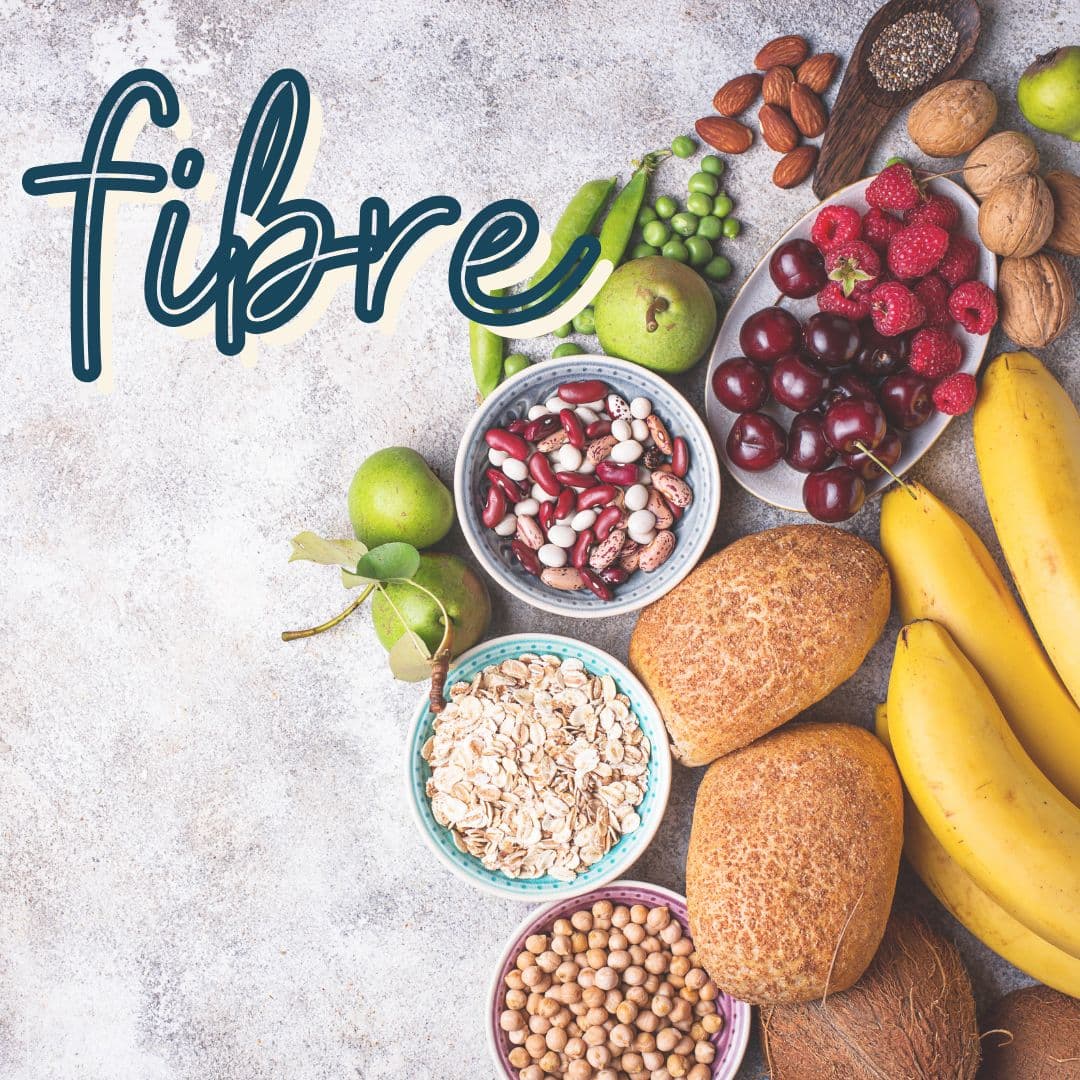
Here is the golden rule of this post: Fibre comes only from plants. If you want more fibre, you need to eat more plants.
Most of us have no clue what our starting point is. Before you try to hit 30g tomorrow (please don't do that—your gut will likely not like it!), you need a baseline.
Hitting 30g doesn't mean eating cardboard. Here's a simple example:
Just like that, you've hit your goal.
If you struggle to get enough fibre from food alone, a supplement like psyllium husk powder (found in products like Metamucil or in bulk bins) can be a convenient addition. About 2 tbsp a day has been shown to improve blood sugar regulation and other cardiometabolic parameters.
We live in a world of ultra-processed, low-fibre convenience foods low on the nutrition scale. It's a systems issue, not just a willpower issue. But by slowly adding more plants to your plate, whether that is beans, berries, or broccoli, you're actually taking a step in the right direction for your current and future health. Check out the latest episode of Phase to Phase: The Hormone Health Show and share it with your loved ones so that we all get more fibre.
If you're struggling with digestion, hormones, insulin resistance, or menopausal metabolic changes, or just figuring out what to eat, you can book here.