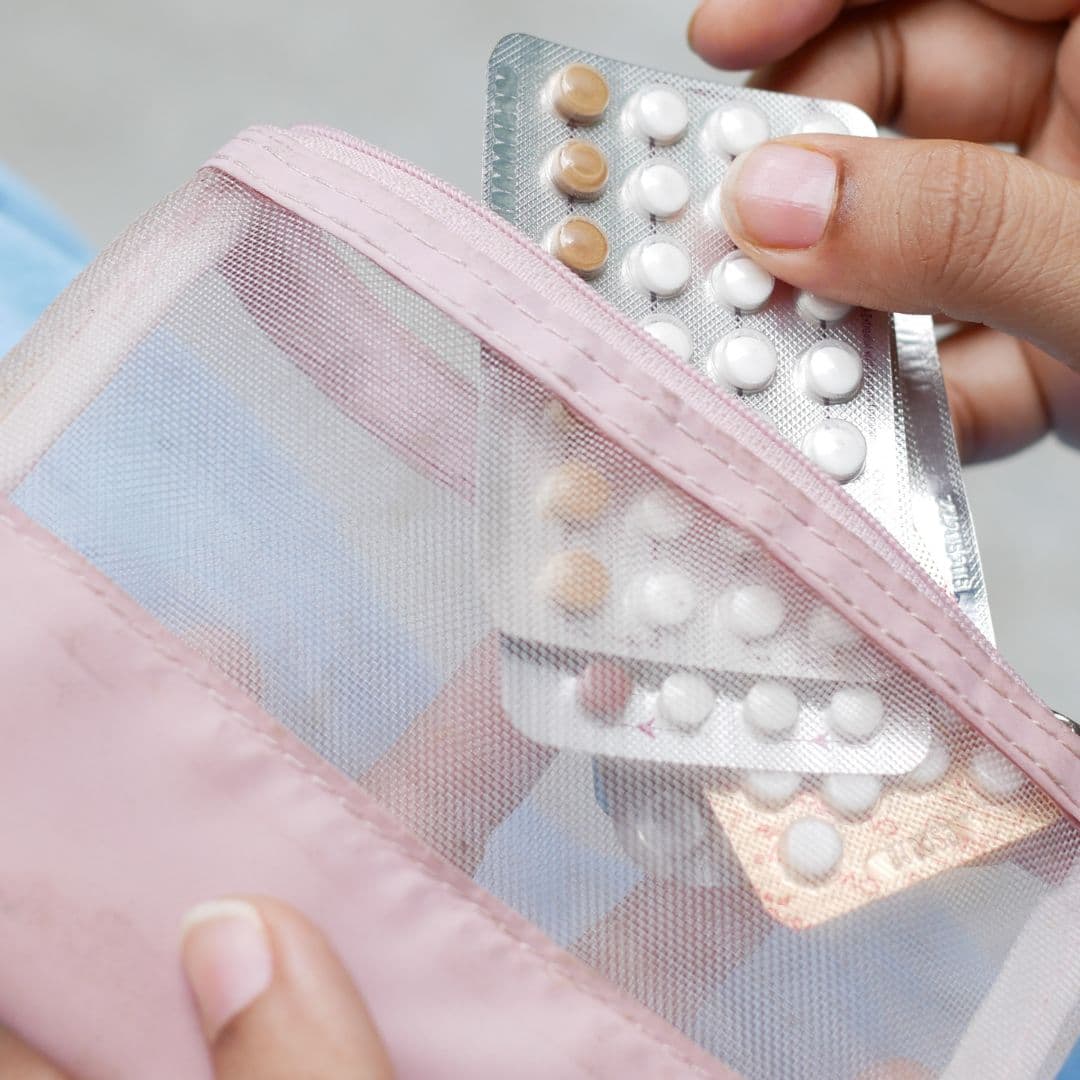
Period pain?
Here's the pill.
Acne?
Here's the pill.
If you've ever walked into a doctor’s office with a hormone-based problem like PMS, period pain, or any of the above, you've likely walked out with a prescription for oral contraceptives.
It feels like the universal solution for pretty much everything, doesn't it?
I have a bit of a history with the pill. Many moons ago, I was put on it for irregular cycles. I didn't particularly feel great on it: I started getting migraines for the first time, my mood suffered. When I wanted to come off it, my family doctor told me that the only other thing she could offer me was a different kind of pill.
But, I wanted to figure out what was going on in my body. Plus, because I felt so crummy on the first one, I didn't really want another one. Anyway, it turned out that I had PCOS, polycystic ovary syndrome.
Because of my own experience, I spent a long time painting all hormonal contraception with a negative brush. I did exactly what you aren't supposed to do in science: I used my own anecdotal experience to judge the entire medication group (yikes!).
As I've gotten older (and wiser haha!) and as I've worked with thousands of women over the last >10 years in clinical practice as a Naturopathic Doctor (in East Gwillimbury, Innisfil, and virtually across Ontario), I understand the importance and utility of the pill.
It's not for everyone (what is?!). It's a great OPTION for many people, though!
I think where we go wrong in medicine is that we don't really have the opportunity to have a conversation about pros/cons and consent.
No one explained to me HOW the pill works, so when I found out that it shuts down the cycle completely, I felt a bit misled. I thought it was "regulating" my actual menstrual cycle, not turning it off entirely!
I also was frustrated that a full investigation into my symptoms wasn't done--I am glad I took the initiative to figure out that I had PCOS.
This is where A LOT of people feel frustrated about the pill (and quite understandably!)
That all said, the pill isn't all evil like it sometimes gets painted on the internet. There's a time and place. It has to be the right fit for you. My colleague, Dr. Brittany Schamerhorn, ND, and I talk about this on an episode of Phase to Phase: The Hormone Health Show.
We often think the pill just "fixes" our cycle, but the combined oral contraceptive pill works primarily by suppressing ovulation. By giving you a constant dose of hormones throughout the month, we shut down your natural hormonal fluctuations. This way, your brain and body don't respond to the ups and downs that can manifest as symptoms.
The bleed you get while on the pill is called a hormone withdrawal bleed (because we didn't ovulate, so the bleed isn't an actual period).
I go through this all in detail in my book, The Period Literacy Handbook. Chapter 9 is all about the pill!
There's many pros of using the pill. It has allowed women and menstruators to have agency over their lives, which is incredible. Here are some of the other pros of the pill:
The main one is right in the name: contraceptive! The pill is a really great form of pregnancy prevention.
Protection against endometrial hyperplasia, which is especially relevant for those of you with PCOS and irregular cycles to protect you against uncontrolled growth of your uterine lining. Here's a blog post on PCOS and the pill.
Symptom relief for period pain, heavy bleeding, acne, and PMS.
Dr. Schamerhorn says that the pill sometimes can also help you "put your ovaries in a box" when life is at full capacity and you don't have the bandwidth to manage hormonal fluctuations.
Cost-effective: in Canada, there's subsidization plus some provinces have made strides to implement universal access under Pharmacare.
Like all other interventions, there are pros and cons.
The biggest one would be the risk of clots, especially for those of you already at an elevated risk of getting clots.
Dr. Schamerhorn put this beautifully in the terms of symptom management vs. disease management. The pill won't "fix" your PCOS or endometriosis, but can offer symptomatic relief, especially if you're also looking for contraception.
There can be various side effects like low mood, low libido, decreased lubrication, etc.
The Society of Gynaecologists and Obstetricians of Canada has a great resource on the pill you can find here.
The decision to go on the pill is yours to make. Sometimes, it may be the best available option given your circumstances. Sometimes, it's a hard no. You're allowed to take time and ask for resources. You're also allowed to change your mind!
Here are 3 questions you can ask your doc to make an informed decision for yourself:
What is the specific goal? (Are we using this for contraception, or just to turn off a symptom?)
How long do I need to be on it? (Is this a long-term plan, or a "just for now" plan?)
Are there other options? (If you value understanding your natural cycle, ask what else is on the table!)
While your doctor can give you the medical stats, only you know your life. Before you leave the appointment, check in with yourself:
What is my current capacity? Do I have the time, energy, and finances to manage my symptoms naturally right now (e.g., supplements, diet changes, cycle tracking)? Or do I need the "ovaries in a box" solution so I can focus on survival/school/work?
What are my values right now? Is it more important to me to understand my natural cycle, or is it more important to have predictability and symptom relief?
How do I feel about getting pregnant? If I don't use the pill, am I confident in using another method (like condoms or fertility awareness)?
You can go on the pill now because it helps you survive a busy season of life. You can come off it in a year to see what your baseline is. You can go back on it later if your needs change.
The goal is to have agency over your health decisions and body. This is what informed and shared decision-making with your health team is all about.
If you want to hear Dr. Britt and I deep dive into the nitty-gritty, including fertility concerns and "Post-Pill Syndrome," be sure to listen to our episode together.
Dr. Brittany Schamerhorn is a naturopathic doctor, Menopause Society Certified Practitioner, and the founder of Ivy Health Clinic in Kelowna, BC. She focuses on women's hormone health—supporting women from PMS to menopause and everything in between.