If you're experiencing spotting between periods, heavy menstrual flow, and severe period pain, you're not alone.
There are a few gynecologic conditions that can cause these symptoms, and what makes things even more difficult is that they love to hang out together.
We're hearing more and more about fibroids and endometriosis (which is great--we need more awareness and support for these conditions!). We're not hearing as much about another gynaecologic condition that affects rough 20-35% of you with a uterus. This conidtion often co-exists with endometriosis and fibroids but is distinct from it.
It's adenomyosis. (I know, it's not particularly easy to spell or pronounce!)
If you haven't ever heard of it, you're not alone. Isolated adenomyosis (meaning you have it and nothing else) only happens in about 10% of cases. Usually, it’s found alongside other conditions like fibroids (50% of cases), endometriosis (11%), and polyps (7%). Plus, in about 30% of cases, it's completely asymptomatic!
If you'd rather watch a video or listen to a podcast episode dedicated to adenomyosis, check out my episode of Phase to Phase: The Hormone Health Show on adenomyosis here.
To understand adenomyosis, we need to do a quick anatomy review. Your uterus is made up of three distinct layers:
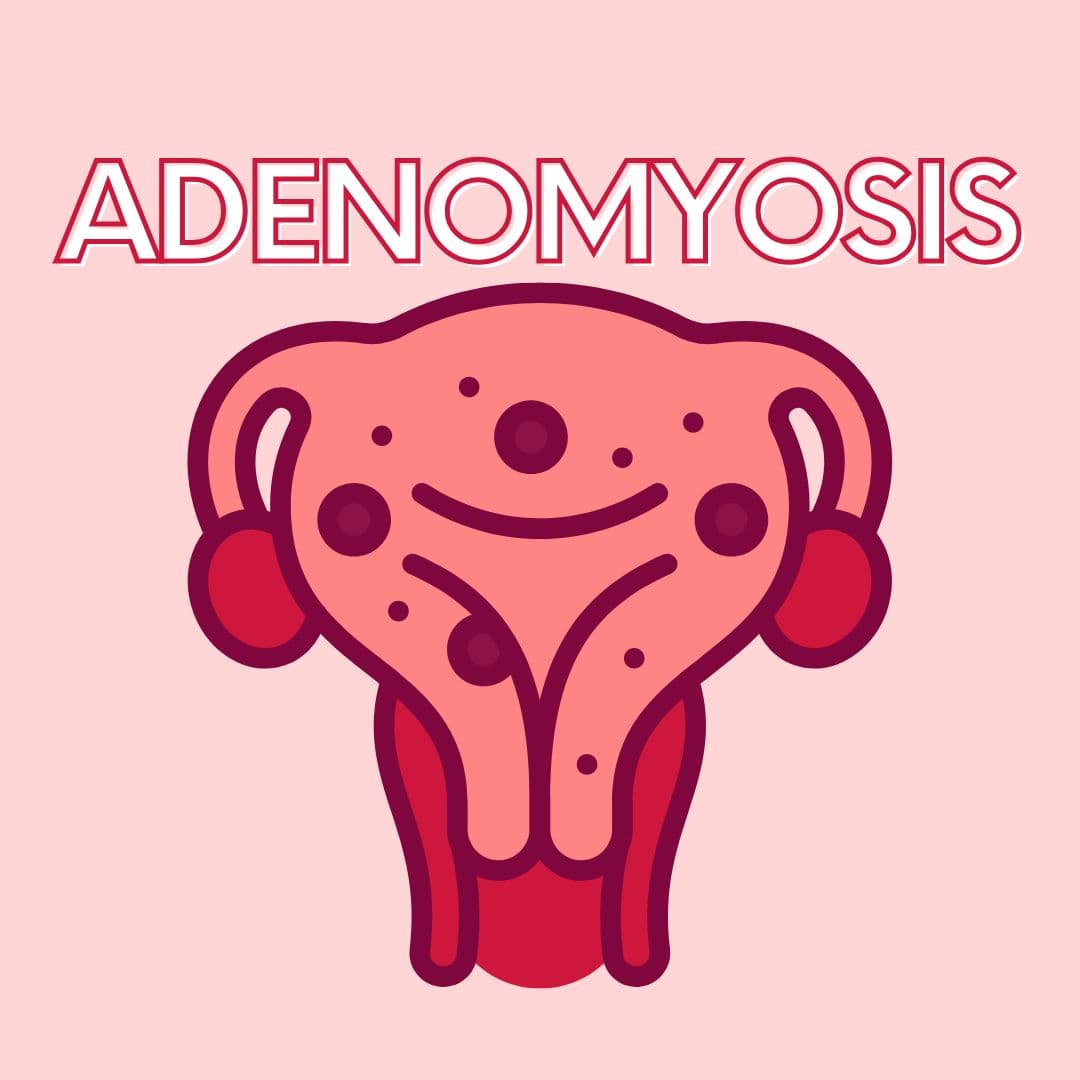
Adenomyosis is a condition in which endometrial glands and tissue (from the inside layer) migrate and grow where they're not supposed to: inside the muscular middle layer (the myometrium).
Because this migrating tissue is hormonally active, it responds to your cyclical hormonal changes every menstrual cycle, just like the inside of your uterus does. Except now, that tissue is trapped inside the muscle.
This can lead to:
The most common symptoms associated with adenomyosis are period pain and abnormal uterine bleeding. This is a blanket term we use for changes in the amount, duration, frequency, or regularity of your blood loss.
Here's what that might look like in real life:
What does 80 ml actually look like? Unless you use a menstrual cup or disc, measuring flow volume in milliliters is tough! In reality, heavy bleeding looks like flooding through products, needing to double up on pads/tampons, or having to change a fully saturated product more often than every two hours. Here's a blog post to help you out too.
Your adenomyosis is not your fault (I want to make sure you remember that!). That said, there are a few established risk factors:
Historically, MRIs were the gold standard. Today, transvaginal ultrasounds are highly specific, sensitive, and vastly more accessible. If you're experiencing heavy bleeding or period pain or the symptoms listed above, a transvaginal ultrasound will help your care team rule in or out adenomyosis, fibroids, polyps, or endometrial hyperplasia. You may need further investigation. If you have adenomyosis, the changes that occur with this condition can make it feel tender and "boggy" (yes, that is the actual technical term!) when your doctor palpates your uterus.
The data here is still evolving because adenomyosis is so frequently lumped in with endometriosis and/or fibroids. However, in assisted reproductive technology settings, adenomyosis is associated with higher rates of pregnancy loss (2 to 3 times more likely), preeclampsia, preterm delivery, and small-for-gestational-age babies. Not everyone with adenomyosis will struggle with fertility! Having adenomyosis does NOT guarantee infertility--you have a higher risk. But if you're fertility track, early intervention and comprehensive testing are vital.
There is NO one-size-fits-all solution for adenomyosis. Your treatment plan depends on your age, whether you are close to menopause, your fertility goals, your access to care, and your personal risk tolerance. This has to be a decision you make with your medical team.
There's limited isolated and robust data on natural interventions specifically for adenomyosis. What we have is data borrowed from endometriosis and fibroids (which makes sense, because they so often travel together and share so many symptoms!). The goal here is to set you up for success and make sure your periods and symptoms aren't getting in the way of your life or health goals!
Friendly PSA: This is not medical advice. Always consult a healthcare provider like a naturopathic doctor before adding herbs or supplements to your routine to ensure you are hitting the right therapeutic dose in a manner that is safe and that is appropriate for you. Natural supplements and therapies come with risks and interactions just like everything else!
I will sound like a broken record saying this, but: TRACK YOUR CYCLES. Use an app, a calendar, or a notebook. Track your pain levels, the number of products you bleed through, and how many days you are sidelined. Our memories are imperfect! Bringing data to your doctor's appointment completely shifts the power dynamic in the room.
Finally, we need to talk about the immense toll that heavy bleeding and chronic pain take on your quality of life. It drains your physical energy, your mental health, your social life, and your wallet.
Between paying out-of-pocket for endless period products and iron supplements to replenish what you're losing, the financial burden is very real. When you build a treatment plan and think about how you want to proceed with your medical care, these factors HAVE to be part of the conversation.
You did not cause your adenomyosis, and you deserve comprehensive, compassionate care. Make sure to listen to the full episode on Adenomyosis on Phase to Phase: The Hormone Health Show and share it with someone who needs to hear this.
I also have a book, "The Period Literacy Handbook", to help you understand your body, hormones, and periods a whole lot better if you're wanting to learn more.
If you're looking to work with a healthcare provider who can help you navigate all the confusing information out there, I'd be honoured to be part of your health team. I see patients in Innisfil (near Barrie), East Gwillimbury (near Newmarket), or virtually across Ontario.