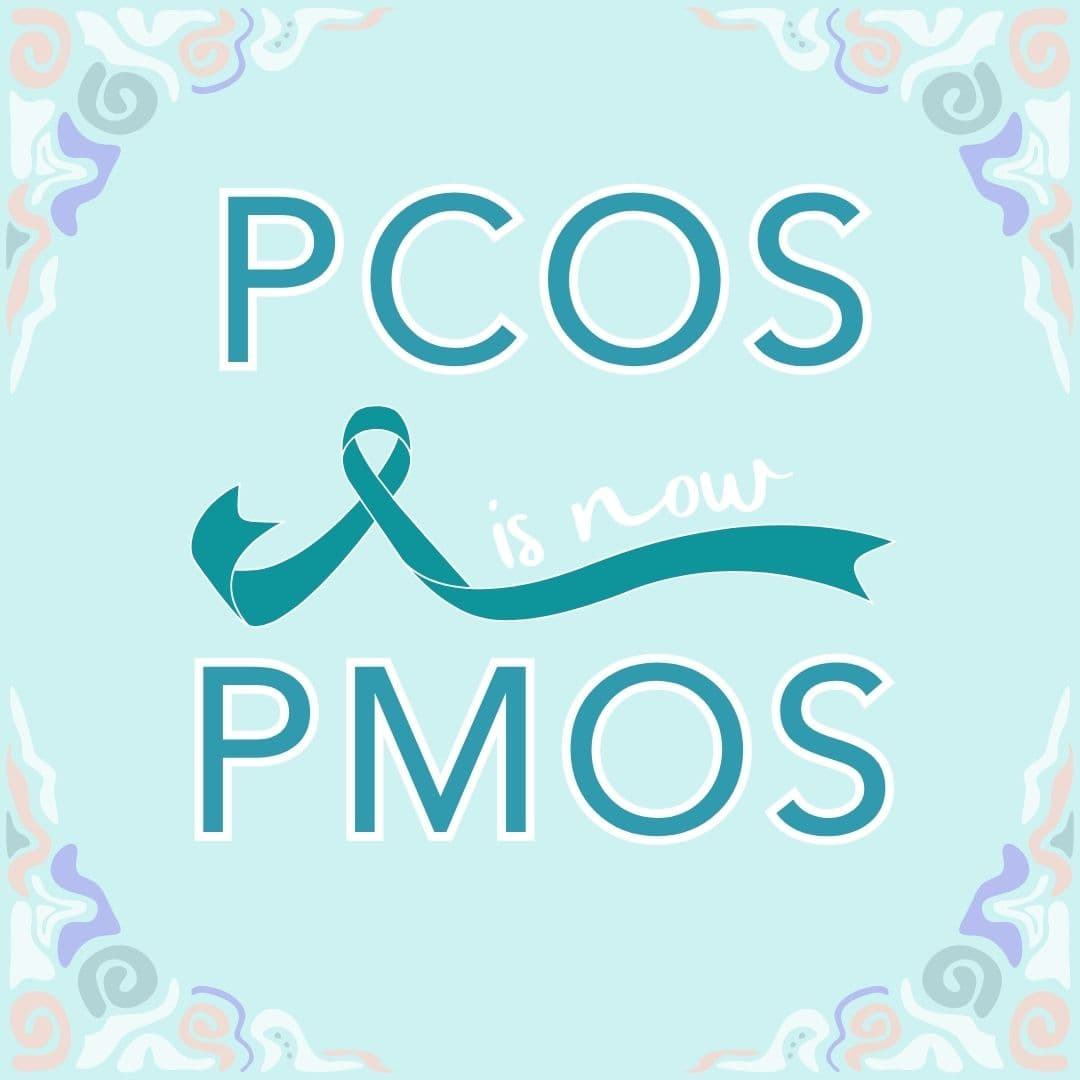
Polycystic Ovary Syndrome (PCOS) got a major rebrand this month on May 12, 2026.
Announced at the AE-PCOS Society meeting and published in The Lancet by Teede et al., this name change has taken the internet by storm!
We're officially transitioning from Polycystic Ovary Syndrome to Polyendocrine Metabolic Ovarian Syndrome (PMOS)--it's a mouthful (from nine syllables to fifteen!) but it's more accurate than PCOS.
This change has been debated in PCOS circles for over a decade--I've been part of a few conversations around this topic. Now, many people (from healthcare providers and scientists to patients and advocates) are looking at this change positively because it’s a much better representation of a multisystem condition that affects your whole body.
But as you can imagine, there’s also backlash and criticism. And rightfully so, especially since the fundamental reality of living with this condition hasn’t changed overnight.
Before we get into the healthcare politics of it all (the good, the bad, and the questionable) let’s answer the top four questions you’ve probably been frantically typing into Google. (I also have a podcast/YouTube episode all on this name change!)
PMOS stands for Polyendocrine Metabolic Ovarian Syndrome. It is the new, official medical term for what was previously known as PCOS (and before that, Stein-Leventhal Syndrome!).
The name PCOS was reductive and misleading. It reduced a whole-body condition to the ovaries only.
You can have what we medically call polycystic ovarian morphology (PCOM), which are not even true cysts, but immature follicles that aren't growing properly, and not actually have the syndrome. Conversely, not everyone with the syndrome even has PCOM or polycystic ovaries!
The new name reflects the nature of the condition A LOT better:
The syndrome part, which refers to a cluster of signs and symptoms, remains unchanged.
Nope! PMOS is just an updated name for the exact same condition. Patients already diagnosed with PCOS automatically fall under the PMOS terminology. You’ll probably see it written with a caveat for a while, like PMOS (formerly PCOS) or PMOS (previously known as PCOS), or even PCOS/PMOS. I'll admit, it’s going to take me a bit of time to get accustomed to saying it, too! I've been saying PCOS for over a decade as someone who has PCOS/PMOS and as someone who treats A LOT of patients with the condition in Innisfil, Newmarket, and virtually across Ontario.
At its core, no. Our fundamental understanding of the condition hasn't changed. That said, might you get slightly different (and, hopefully better (fingers crossed), care? Yes. Because we’ve put "metabolic" and "polyendocrine" right in the name, it stops providers from reducing your care entirely to ultrasounds and birth control. Hopefully lean PCOS/PMOS patients will get better care too.
So, why go through all the trouble of changing a name that millions of people already know?
Now, let's get into this name change a bit deeper, especially looking at what was presented in The Lancet paper:
*Here is their exact, verbatim rationale for why this was necessary:
Their rationale perfectly mirrors what patients have been saying for years: the old name obscured the condition’s metabolic features, reinforced stigma, delayed diagnosis, and hindered effective clinical care.
This change was born out of two massive global surveys and workshops (unfortunately and not surprisingly, populations in Asia, Africa, and South America where there's a high prevalence of PCOS/PMOS were under-represented in these surveys and workshops).
A few options were rejected because of what the acronym would sound like. "Metabolic Endocrine Reproductive Syndrome" was out because MERS is a severe respiratory disease. "Endocrine Metabolic Ovulatory Syndrome" (EMOS) was out because it overlapped way too closely with the "emo" youth subculture. So, they landed on PMOS, which conveniently only changes one letter.
Is it a perfect name? No. There is still pushback on keeping an ovarian term because it excludes people without ovaries and minimizes the fact that this is a lifelong issue well past menopause. But is it better than before? Yes.
There are some very real upsides to this name change, like:
Let’s talk about the very real criticisms and growing pains accompanying this change:
It's gonna be a bumpy road--change comes with ups and downs (and twists and turns!).
The Lancet article lays out a specific 3-year implementation strategy. Expect to see integration into Electronic Health Records (EHR) and engagement with the World Health Organization to get this adopted into the ICD codes by the 2028 International Guidelines update.
I’ll be talking more about this topic in the fall once we’re on the other side of PMOS Awareness Month and we see how the industry adapts (especially keeping an eye on bad actors and profiteering with a change like this!).
Until then, we keep advocating, we keep questioning, and we keep the most important person in mind: YOU. Regardless of the acronym, the most important part of this whole conversation is your health and your care.
Make sure to send this to someone who would benefit from hearing it—a relative, a colleague, or your healthcare provider.
I have PMOS (formerly PCOS) and I treat a lot of patients with PCOS/PMOS in my practice in Innisfil, East Gwillimbury, and virtually across Ontario. If you're looking for a naturopathic doctor to support you, you can book an appointment here.
References & Resources: Teede et al., Lancet. May 2026. PMID: 42119588 AE-PCOS Society Phase to Phase: The Hormone Health Episode on PCOS to PMOS by Dr. Anne Hussain, ND