Now, as I approach my 40s, especially as I support more and more perimenopausal and post-menopausal women in my practice as a Menopause Society Certified Practitioner, I'm setting myself and my patients up for success for now and the long-term sooner rather than later.
Because, the reality is: hormone change and menopause will happen if you're someone who menstruates.
It's not a matter of IF, it's a matter of WHEN.
Exercise, nutrition, stress management, and mental health support might not prevent you from all the twists and turns of perimenopause, BUT they are critical for your health and can help smoothen those ups and downs.
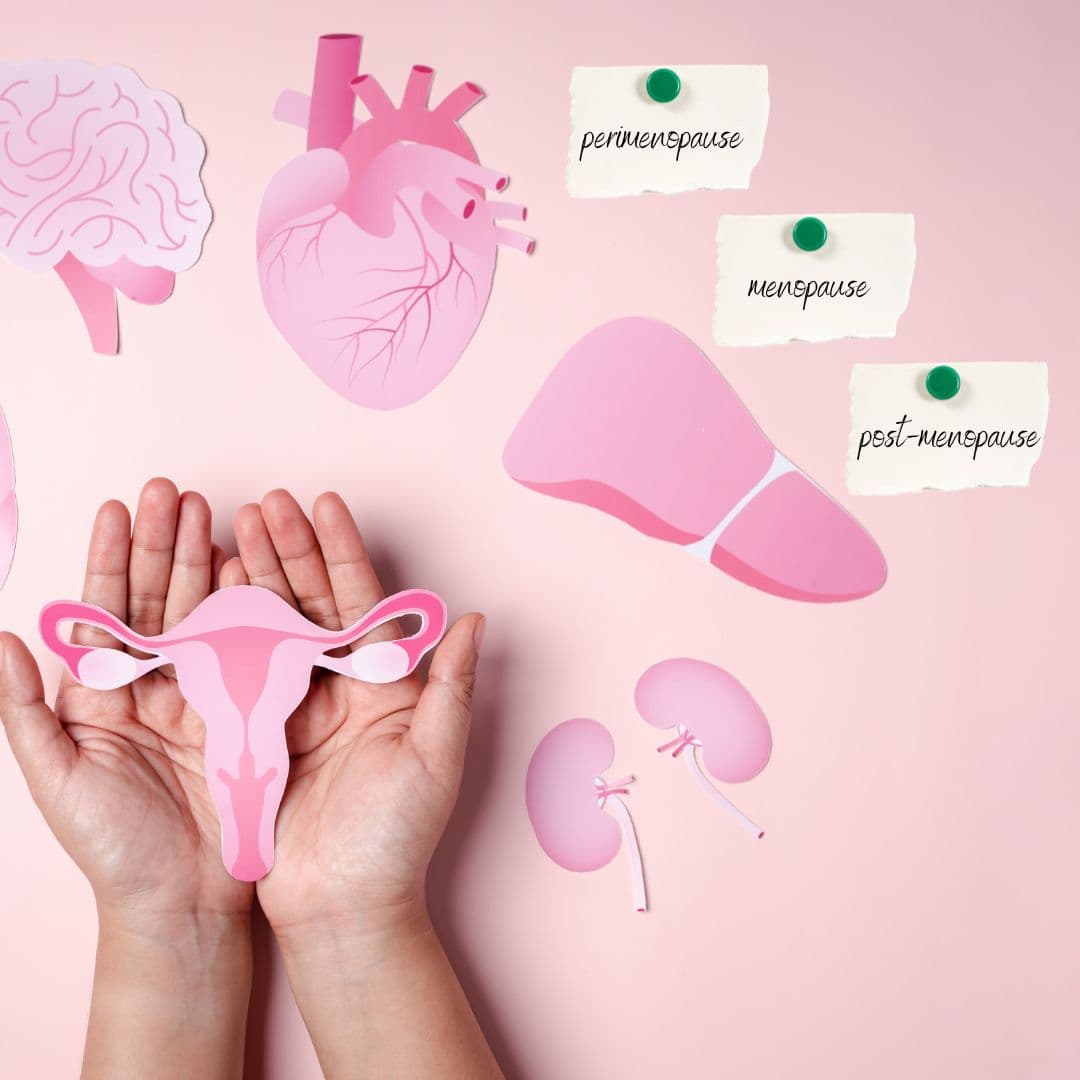
Menopause: This is a singular day when you've gone without a period for 12 months (and not due to other medical reasons!)
Perimenopause: The years leading up to menopause, which can last many years (like even a decade!) marked by subtle (or not-so-subtle) menstrual cycle changes. Some symptoms like insomnia and/or mood can start to shift even before your periods change.
Post-menopause: Your status after you've officially reached menopause.
There's also a term called "premenopause". This is the prime reproductive years when menstrual cycles have been established post-adolescence up until perimenopause.
Changes in hormones, often referred to as "hormonal imbalances", are part and parcel when it comes to this time of life.
How YOU experience hormone change can vary significantly from someone else going through perimenopause. Some people don't notice much, while others have LOTS of changes, like:
heavier or lighter periods
more or less period pain
spotting in between periods
shorter or longer menstrual cycles
hot flashes and/or night sweats (these are called vasomotor symptoms and can range from mild to severe)
vaginal dryness and/or frequent urinary tract infections (UTI) -- grouped under genitourinary syndrome of menopause or GSM
anxiety and/or depression
metabolic changes like higher body fat, especially around the mid-section, blood sugar problems, higher cholesterol, or changing blood pressure
fatigue, poor memory recall, and brain fog
insomnia, which could include difficulty falling and/or staying asleep
The Menopause Society does a great job of summarizing some of the most common signs and symptoms of perimenopause that you can check out here.
There's a wide range in how people experience perimenopause. Some people don't get many symptoms at all, others only get symptoms once they've entered into post-menopause life, some people experience vaginal dryness or hot flashes only, some people experience all the symptoms for years.
What's essentially happening is that you no longer have that many eggs around. As a result, you may have cycles in which you're not ovulating at all. You also might ovulate irregularly. What this means is that your estrogen can sometimes be up and sometimes be down. Also, your progesterone may be produced irregularly -- it's around when you ovulate, but not so much when you don't ovulate. These are all variations on what is normal in perimenopause!
Even though the hormonal changes are natural, it doesn't mean that we leave you to suffer! Please get support -- there are so many ways to support you.
A good place to start is tracking your signs and symptoms and doing some blood work. More on that in this blog post.
Regardless, your foundational day-to-day habits REALLY matter!
Starting with the basics -- exercise, nutrition, stress management, education, and sleep -- is a great place to start to set yourself up for perimenopausal success.
These are some of the things I talked to my friend and fellow Menopause Society Certified Practitioner colleague, Dr. Laurie Alpert, ND in an episode of Phase to Phase: The Hormone Health Show.
In honour of Menopause Month in October, we cover all the signs and symptoms that get overshadowed by hot flashes and hormone therapy in discussions surrounding perimenopause. We spend a good chunk of time on sleep and insomnia in menopause. And, obviously, we offer practical tips and tools for you to have a more peaceful perimenopause, like:
how caffeine and alcohol affect your hormones and health
which testing is most important in midlife
what kind of nutrition changes are important in perimenopause
which forms of exercise are best for hormonal health
how to advocate for better hormonal health in the menopause transition
Check out the episode on perimenopause here.
Make sure to go listen to the episode wherever you get your podcasts. And, if you're looking for support, practitioners like Dr. Laurie and myself support tons of peri- and post-menopausal women in Ontario!
Dr. Laurie Alpert is a Naturopathic Doctor and Menopause Society Certified Practitioner with expertise in supporting women through perimenopause. Combining conventional standards of care with evidence-based integrative therapies, she provides strategic and collaborative healthcare to help you make the most of this transition. In addition to providing one-on-one clinical care to Ontario residents, she facilitates a Clinical Menopause Mentorship program for integrative medical professionals and has designed a DIY 8-week Perimenopause Sleep Solutions experience to support the unique needs for sleep recovery during this significant life stage. More about Dr. Laurie and working with her.