In your 30s and early 40s, you're often juggling career growth, relationships, and future planning ... finally feeling like you're an "adult!" Having your periods stop or being told you’re entering menopause decades ahead of schedule isn't usually part of the plan.
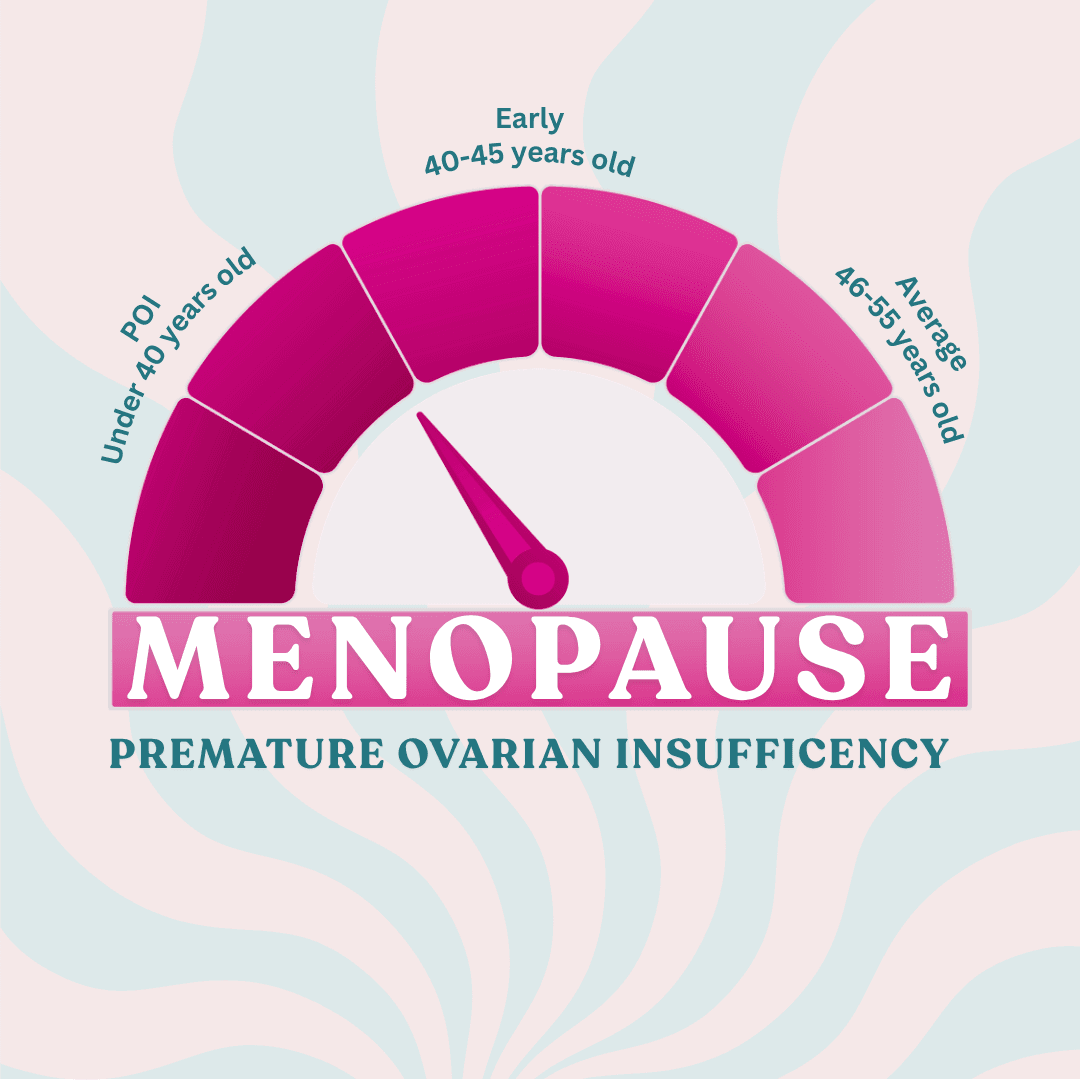
The average age range of menopause is between 46 and 55 years old. It makes sense that when we talk about menopause, the narrative assumes we're in our late 40s and 50s. When the transition arrives years before expected, a diagnosis of Premature Ovarian Insufficiency (POI) or early menopause can feel overwhelming--understandably so!
The average age of menopause is 51-52 years old in North America, with the average range being 46-55 years old.
- Early Menopause: Reaching menopause between ages 40-45 - Premature Ovarian Insufficiency (POI): Ovarian activity is lost before the age of 40 years old.
We look at these conditions almost on a continuum, and we don't fully understand POI right now. Recent studies have shown that the prevalence of POI is ~3.5% of menstruators. The contributing factors include:
History: POI used to be called premature ovarian failure (POF) and primary ovarian insufficiency (POI) in the past. Premature ovarian insufficiency is definitely a more accurate term and that's what the latest guidelines recommend.
Because younger women are frequently told "you're too young for menopause,"** diagnostic delays are extremely common.** Missing periods in your 30s is often mistakenly written off as stress, PCOS, or hypothalamic amenorrhea. We, obviously, want to rule these things out as well as pregnancy, prolactinoma, thyroid disease.
The Clinical Diagnostic Criteria for POI
To confirm POI or early menopause, healthcare providers look for two specific criteria:
Other tests to consider would be estradiol levels (which tend to be low), AMH to check ovarian reserve (especially in fertility settings--routine testing is not recommended), autoimmune disease testing, and tests related to the conditions listed above. As a note, chromosomal or genetic testing is recommended for POI if it's non-iatrogenic; also, if you have a sister or daughter (as someone with non-iatrogenic POI), they should be counselled that they might be at a higher risk of POI as well.
Symptoms that you may be experiencing that you should be tracking include:
Estrogen acts as an important and vital metabolic and health protector across your entire body. When estrogen production declines decades earlier than expected, there are many long-term health risks, many of which you might not FEEL:
Bone Density Loss: Estrogen regulates bone turnover, and progesterone is involved in bone health as well. Without it, rapid bone density loss occurs early in life. If you have POI or reach menopause early, the risk of osteopenia and osteoporisis, and bone fracture risk as well, is much higher. A bone mineral density scan is recommended for this population.
Cardiovascular and Metabolic Health: Estrogen helps maintain arterial flexibility and has a protective effect on cardiometabolic health (think blood sugar, cholesterol, abdominal weight, etc.). Early estrogen loss accelerates vascular stiffness, raises cholesterol levels, impairs blood sugar regulation, and significantly increases long-term cardiovascular disease risks because many of these changes start sooner and are around for longer.
Brain Function and Cognition: Estrogen exerts key neuroprotective effects in the central nervous system. Deprivation of hormone support during early adulthood is associated with a higher long-term incidence of premature cognitive decline and dementia.
Genitourinary Health: Tissues in the vulva, vagina, bladder, and urethra rely on local estrogen. Early loss may trigger Genitourinary Syndrome of Menopause (GSM), leading to tissue thinning, vaginal dryness, painful intercourse, urinary frequency, and recurrent urinary tract infections (UTIs). Not everyone responds in this way, but it is common.
Mental and Emotional Health: The sudden loss of hormonal regulation, combined with the psychological strain of an unexpected diagnosis, creates a higher risk of major depressive disorder, anxiety, and psychological distress. The grief of this diagnosis, not going through perimenopause alongside peers, feeling misunderstood, changes in libido and GSM symptoms, and the identity shift can also add layers of complexity. Please know that the grief is experienced by many, and there are supports available to you.
One of the most common questions women ask after receiving a POI diagnosis is whether pregnancy is still possible. Unlike age-related natural menopause where ovarian function stops completely, POI involves intermittent ovarian function. As in, some people may ovulate occasionally and unpredictably.
If you don't want to get pregnant, you likely want to consider contraception. If you DO want to try to conceive, then getting fertility care, ideally with a reproductive endocrinologist ASAP is recommended to review your options and next steps.
Supporting your health and wellbeing so that you live a long and healthy life with POI and/or early menopause requires a multifaceted approach, like any condition. The goal is to replace hormones that are being lost earlier than expected, help you manage your symptoms and goals, while protecting your bone, heart, brain, and mental wellbeing through lifestyle and integrative strategies.
Systemic Hormone Therapy or Hormone Replacement Therapy (HRT): Standard treatment involves continuous systemic estrogen paired with progesterone (if you have an intact uterus) to protect your bones, heart, brain, and metabolic health. For early menopause or POI, hormone therapy is treated as physiological replacement therapy. The clinical goal is to replace the precise estrogen and progesterone levels your body would naturally produce until you reach the average age of natural menopause (around 51 or 52 years old). It is important to distinguish between standard Menopausal Hormone Therapy (MHT) for someone reaching menopause at an average age verus hormone replacement therapy for someone with POI or early menopause.
Local vaginal estrogen: For localized symptoms associated with GSM like vaginal dryness, painful penetration, and recurrent UTIs, low-dose local vaginal estrogen or vaginal DHEA (Intrarosa) can be safely added alongside systemic replacement to restore tissue hydration and strengthen the urinary tract.
Sleep & Stress management: Estrogen loss can disrupt circadian rhythms, thermoregulation, and neurochemistry, making deep sleep harder to achieve. Prioritizing sleep hygiene, nervous system regulation (such as breathwork, exercise, etc.), and active stress reduction is important for your day to day life.
Community & Counselling: Isolation is one of the highest modifiable risk factors for negative psychological outcomes in POI. Individual therapy, Cognitive Behavioral Therapy (CBT), couples counseling, and peer support communities provide crucial spaces to process identity loss, navigate relationship dynamics, and alleviate the grief of an unexpected medical transition.
Exercise & Nutrition: Weight-bearing exercise, resistance training, and high-impact activities (as tolerated) are critical for stimulating bone remodeling and preserving muscle mass. Working on decreasing sedentary time and adding agility and flexibility work are all important as well. On the nutrition front, prioritize a heart-healthy diet that has plenty of fibre (more than 25-30g), adequate protein, lots of fruits and veg, rich in calcium, and includes balanced meals to support all aspects of your health.
Herbs & Supplements: These should be discussed with a healthcare provider like a naturopathic doctor to ensure we're offering your support for what you need at the appropriate dose. This can include herbs for symptom management, supplements to address deficiencies, preventive therapies, and so much more.
POI can be a difficult diagnosis, but we know so much more than we ever have in the past. Make sure to gather a team so you're well-supported in all areas of your health and life.
This post was inspired by a conversation with Dr. Nadia Saleem, ND MSCP for The Perimenopause Summit on Sept 21-24 (it's virtual and free to attend, check it out!).
If you're looking for support with POI or early menopause, both, Dr. Saleem and I are accepting new patients virtually and in person--Vaughan, and myself in Innisfil and Newmarket, ON.
Note: This post does not constitute medical advice, please consult with your medical team for your care.
References: https://menopause.org/patient-education/menopause-topics/premature-menopause Sopiarz N, Sparzak PB. Primary Ovarian Insufficiency. 2023 Mar 6. In: StatPearls [Internet]. Treasure Island (FL): StatPearls Publishing; 2026 Jan–. PMID: 36943992. Yeganeh L, Giri R, Flanagan M. Evidence-based guideline: Premature Ovarian Insufficiency. Fertility and Sterility, 2024; 123, 221-236