Maybe you’re dealing with brain fog, unexplained weight gain, acne, hot flashes, or intrusive thoughts. Maybe crippling anxiety and debilitating fatigue are suddenly getting in the way of your life.
You might suspect you have a "hormonal imbalance".
And, when something is off in our bodies, what do we look to?
Testing.
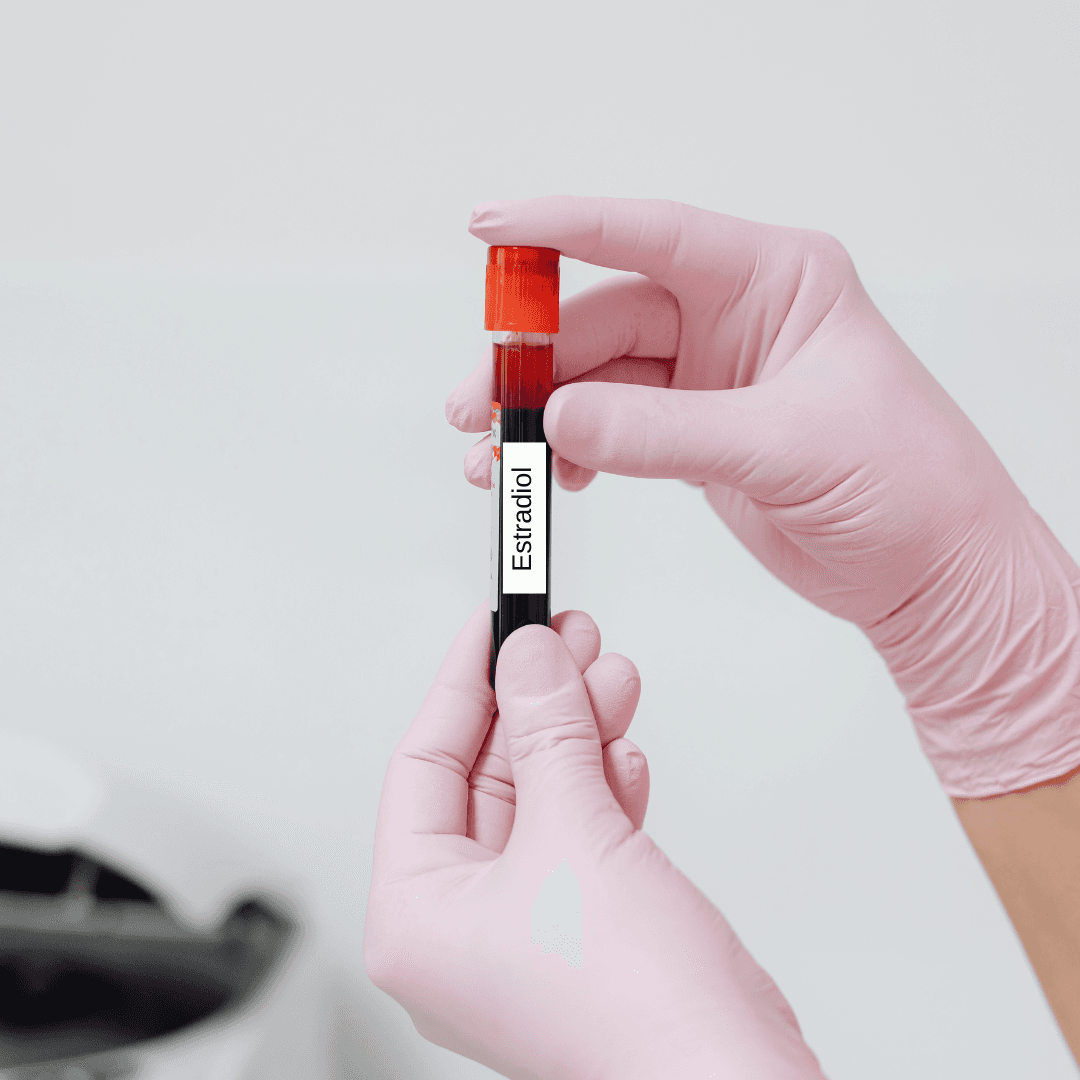
So you ask your doctor for a hormone test. Maybe you even consider dropping serious cash (and, I mean upwards of $400) on one of those expensive, fancy tests you see influencers talking about online ... especially after your doc is like: "I'm not going to run your hormones".
I wanna tell you what your doctor may not be saying out loud because, sometimes, hormone testing really is NOT the answer.
I see women and menstruators across Ontario in my naturopathic practice and I get the question about hormone testing ALL THE TIME!
Usually, the desire for testing stems from one of five main experiences:
Many of these signs and symptoms are driven by hormone changes (and how your body experiences your hormonal fluctuations); however, hormone testing isn't ALWAYS the answer.
In medicine, we love objective testing! It gives us many answers! If you are tired and losing hair, we test your iron and vitamin D. If either is low, we give you a supplement, re-test later and review your symptoms, and measure your progress. Hormone testing isn't necessarily like that.
This is because:
(a) sex hormones like estrogen and progesterone naturally fluctuate so there's a huge range that's considered normal; for e.g., progesterone only rises after ovulation.
(b) we can't (often) draw a straight line from a particular estrogen or progesterone level to a particular symptom; for e.g., you may feel great at a particular estrogen level in your follicular phase, but not so much in the luteal phase (even if it's the same number!).
(c) we all respond to hormone change a bit differently, which is why PMS and perimenopausal symptoms can vary so much; this is where your circumstances, your medical history, stress resilience, lifestyle, and even genetics/past, can affect how your body perceive hormonal fluctuations.
Don't get me wrong—there's definitely a time and place for hormone testing (more on that later!).
Your experience is the most important information when it comes to your hormone health. Hormones have their fingers in so many systems of the body: periods, brain, mood, metabolism, pain, sleep, digestion, and more! All of these systems can be affected by hormone change. When I see patients in my practice in Innisfil, East Gwillimbury, or virtually, I assess their health and then identify what testing we should run based on that.
Sometimes, that includes one or more hormones like estrogen, testosterone, DHEA, prolactic, and progesterone. And, sometimes, it does not.
Because so many women fall through the cracks of conventional medicine, marketing buzzwords like "estrogen dominance" are used to target us when we're exhausted and vulnerable.
Marketing buzzwords that sound kind of like science but are not--think: "hormone imbalance" and "estrogen dominance"--are then used to market to us (while we're simply trying to get some answers and feel better!). More on that here.
In the online space, influencers and coaches (who are mostly unregulated and normally aren't allowed legally to run blood work) can run "fancy testing" that test your hormones in urine and such. While some of these coaches are well-intentioned, the data on these tests is often not clinically useful for the average person. They usually cost 3 to 10 times more than standard tests, have built-in profit margins, and, most importantly, they rarely change your medical treatment plan or our understanding of what's going on.
The most scientific and evidence-based way to test hormones is still blood testing. These can only be performed by regulated health professionals like medical doctors, naturopathic doctors, and nurse practitioners. We don't profit off these tests either.
I'm not saying that hormone testing is NEVER useful or appropriate.
Hormone testing can be extremely helpful in many cases, like:
There are other reasons too! But for general fatigue, PMS, or common perimenopause symptoms, your lived experience and your symptoms tell us far more than a snapshot of your estrogen levels.
If you feel off, we shouldn't just guess. Instead of chasing fluctuating sex hormones, however, we need to look at the foundations that dictate how your body handles hormone changes.
Basic blood testing for ferritin (iron), vitamin D, thyroid (TSH), and vitamin B12 is important! A sleep study could be appropriate too!
If your baseline energy is at a 4/10 because you are iron deficient, bringing those levels up will make you far more resilient to natural hormonal shifts. Add in proper sleep, stress management, regular physical activity, social connection, and solid nutrition, and the way your body experiences hormone changes will change :)
Remember, your signs and symptoms are important indicators of how we support you and what we test. Note them down so that you have a solid record to share with your health team.
If you’re feeling off and/or dismissed, you don’t have to navigate this alone. If you are in Ontario, I would love to help you get to the bottom of your symptoms. I offer naturopathic care for hormonal health (think PCOS, perimenopause, endometriosis, hypermobility, thyroid disease, fertility, and more) virtually as well as in-person in Innisfil and East Gwillimbury.
And, don't forget to check out the hormone testing episode of Phase to Phase: The Hormone Health Show to understand when hormone testing is very important (like if you're experiencing infertility or rapidly changing hormonal symptoms), what other tests are SUPER important to how you experience hormone change, and what you need to do to figure this out with your health team.