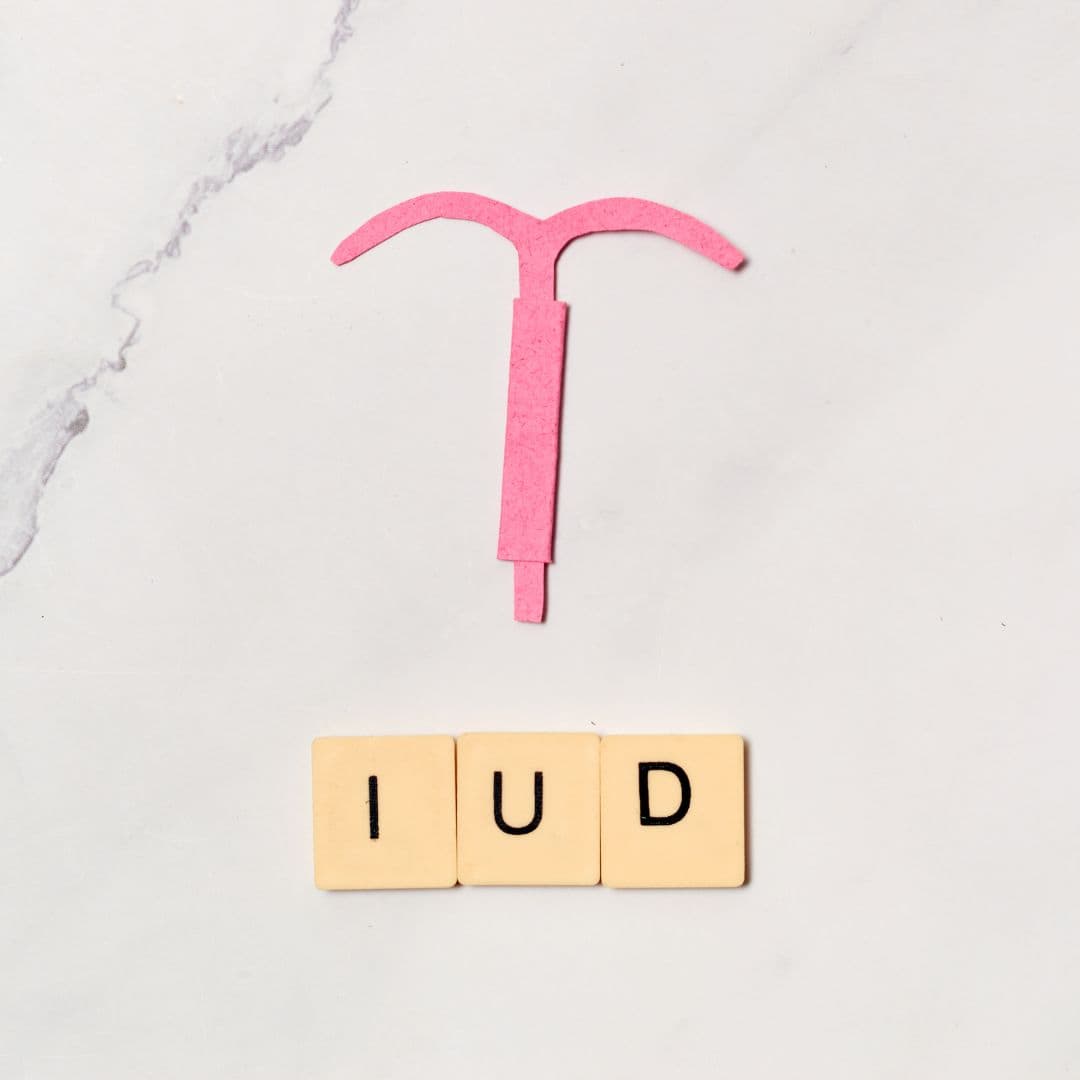
The hormonal IUD (or IUS for intrauterine system) is an extremely effective contraceptive! You might know these by their brand names, like Mirena, Kyleena, or Skyla.
While we use it for that purpose very often and it has gained popularity in the last decade, there's a lot of other things that the IUD can help with, especially in perimenopause.
The hormonal IUD (or IUS) can be a lifesaver for heavy flow and period pain.
Plus, it actually can offer endometrial protection if you're someone using estrogen as part of your menopause hormone therapy (MHT).
I'll get to that in a minute. First, let's talk IUD.
The hormonal IUD is a small, T-shaped device inserted into your uterus by a healthcare provider. Unlike copper IUDs, which contain copper wiring, the hormonal IUD features a reservoir containing a progestin (a molecule that's kind of like our hormone, progesterone) called levonorgestrel. This hormone is released slowly into the uterus over its lifespan.
Levonorgestrel works locally in three ways (the first bullet point is the main way):
Different IUDs deliver different doses. The higher-dose option (like Mirena) contains 52mg of levonorgestrel. It starts off releasing around 18–20mcg per day, gradually tapering down toward ~10mcg per day near the end of its lifespan. Lower-dose options like Kyleena or Skyla release less hormone and need replacing sooner (around the 3–5 year mark).
Perimenopause, on average, lasts 4-8 years. It is defined by hormonal fluctuations and menstrual cycle changes like heavy flow, prolonged flow, shorter cycles, longer cycles, irregular cycles. For some people, it can be really disruptive, while not so much for others. The hormonal IUD can offer a few advantages for someone in perimenopause:
If you decide to start estrogen therapy for perimenopause or menopause symptoms (like hot flashes or night sweats) or for osteoporosis prevention, you need a way to protect your uterus. If you don't have a uterus, we don't need to protect it, obviously, and you can use estrogen on its own (although you might be prescribed a progesterone for other signs and symptoms!).
Taking estrogen on its own (known as unopposed estrogen) is associated with a significant, dose-dependent risk of endometrial hyperplasia (an overgrowth of the uterine lining) which can lead to endometrial cancer (or uterine cancer) within 1 to 3 years of exposure.
To prevent this risk, menstruators and women with a uterus using systemic estrogen require a progesterone or progestin to protect the endometrium. This is typically given sequentially (for ~2 weeks per month) OR continuously (daily). The best protection comes from daily or continuous dosing, especially if we're using hormone therapy for more than 5 years.
Long-term sequential HRT use (over 5 years) can still carry a small, dose-dependent risk of endometrial hyperplasia due to periodic progestogen gaps.
There are multiple options for the progesterone or progestin component. BUT where the 52mg levonorgestrel IUD like Mirena shines in perimenopause is when/if:
Delivering progestin directly to the endometrial lining provides strong, continuous local protection against estrogen-induced overgrowth. Note: the lower-dose IUDs are not used for this purpose.
Because the hormonal IUD often causes light spotting or causes your period to disappear altogether (amenorrhea), we can’t really rely on the classic definition of menopause (which is 12 consecutive months without a period).
To figure out whether you’ve reached menopause while using an IUD or not, we look at the full picture:
While the hormonal IUD is generally safe and well-tolerated, there are a few important considerations to keep in mind:
As always, nothing in this post is medical advice, so always talk to your health team as you're making sure if this is the right fit for you and what to expect.
It is important to distinguish between how long an IUD lasts for birth control versus how long it lasts for endometrial protection in MHT:
If you are using your IUD both as birth control and as the progestin portion of your MHT regimen, plan to discuss replacing it at the 5-year mark to ensure your uterine lining remains fully protected. Or, if menopause has been reached, a different type of protection like progesterone or progestin can be used.
I obviously can't give you the answer here as this is not a medical appointment, but it CAN be a good option for a lot of people. There's obviously downsides, but lots of upsides too!
It's far more than just a contraceptive. In perimenopause, it serves a dual (or even triple!) purpose: keeping heavy bleeding and painful cramps under control, preventing unplanned pregnancy, and providing effective endometrial protection if you choose to start estrogen therapy.
As a Naturopathic Doctor & Menopause Society Certified Practitioner, this is something I talk about with many of my patients. If you're in Ontario and looking for guidance, I see patients across Ontario virtually + in-person in Newmarket and Innisfil. You can book an appointment here.
References Voedisch, A. J. (2025). Menopause, 33(1), PMID: 40957020 Government of Canada: Medical Management of Menopause Symptoms.